Journal{{ art.kicker }}{{ art.read }}
{{ art.title }}
{{ art.dek }}
{{ para.t }}
{{ para.t }}
Most cinnamon sold today is cassia, a cheaper bark from a different tree. Ours is true Ceylon cinnamon, steeped as tea in three blends, each paired with something grown beside it.
“Black tea with a little more character. The richness of the tea and the warmth of cinnamon make this a great way to start the morning. It feels familiar, but with a personality of its own. My new morning ritual, and the first deal of the day I don't regret making.”
“The hibiscus brings a beautiful tartness, while the cinnamon adds a lovely warmth that brings everything together. It's become my favourite way to transition out of work mode and into my own time. And if you catch me making a second cup, yes, I'm guilty. Red-handed, actually.”
“Blue water lily and cinnamon make for a tea ritual that feels like stepping away from the noise of the day. I love the idea of ending the night with something a little different, something that invites you to slow down and enjoy the moment. My favourite excuse to be unavailable. No further questions, please.”
Ceylon black tea for the bright, waking half; cinnamon to keep it round. Three minutes gives a bright cup, four a fuller one.
Hibiscus and cinnamon, steeped until the cup runs deep red. Bright, tart and caffeine-free. Hot, or over ice.


Blue water lily and cinnamon, the calm, quiet half of the day. Four to five minutes. Take it as it is.
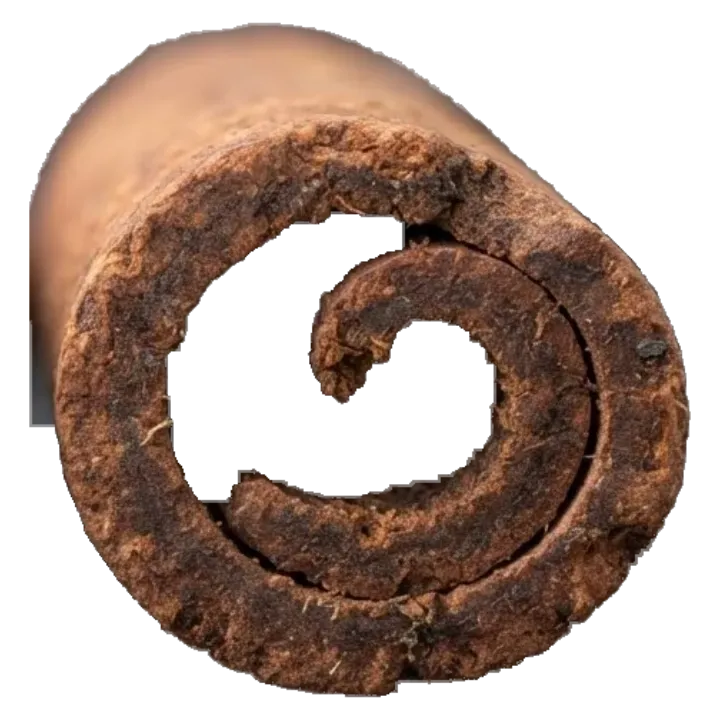
One thick, hard curl of bark. Hot and sharp in the cup. What most jars on most shelves contain.
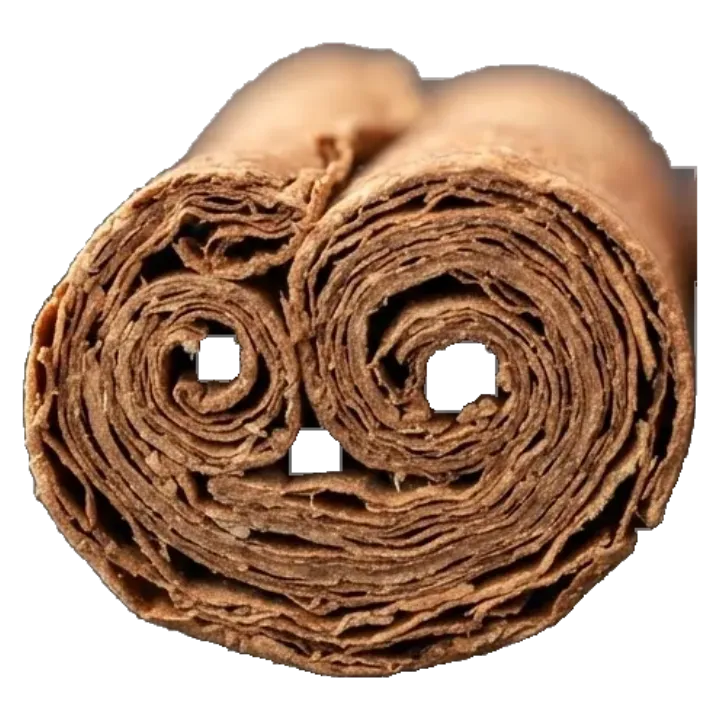
Paper-thin layers, rolled by hand. Soft and sweet in the cup. Native to Sri Lanka, and the only cinnamon we use.
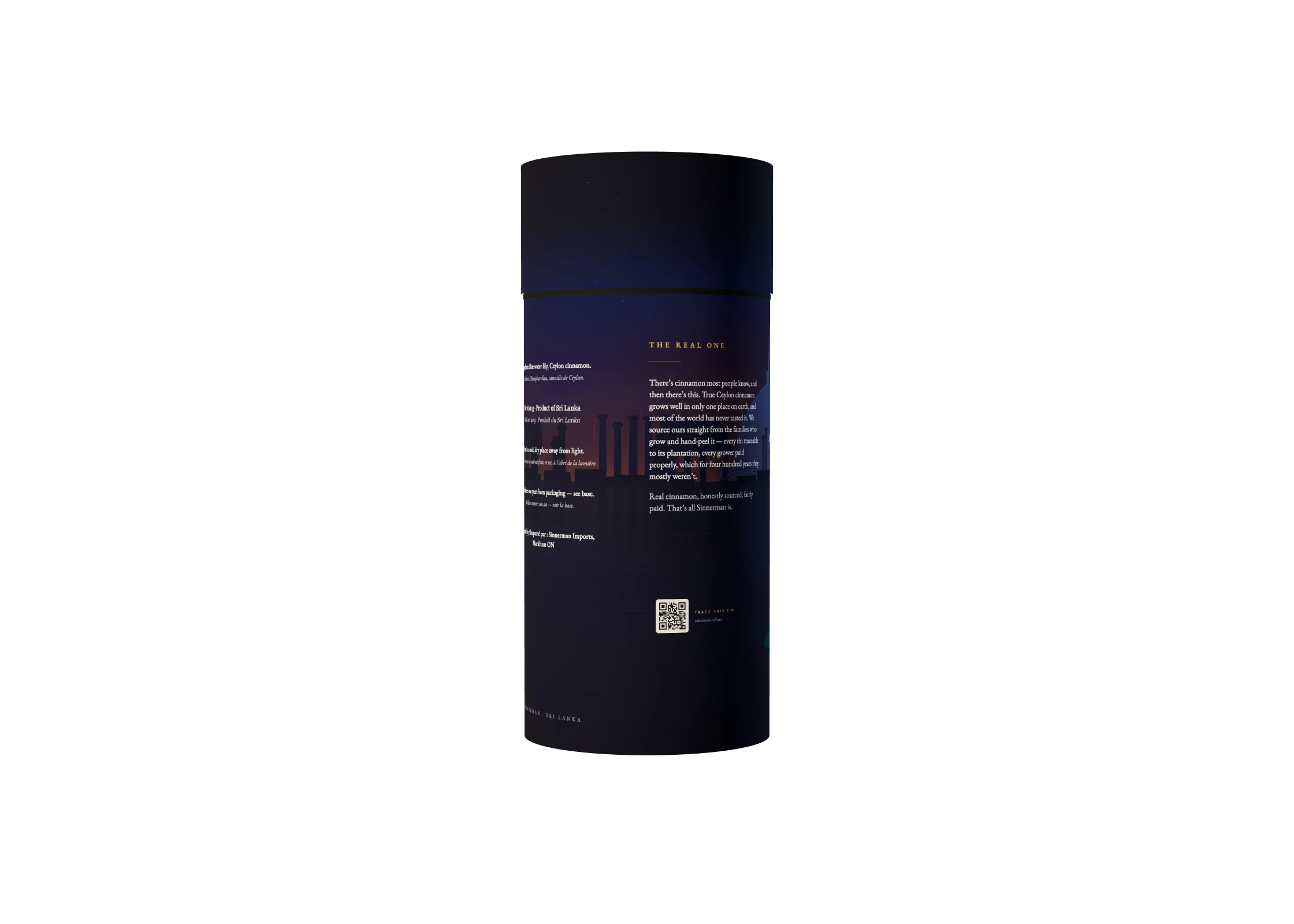
There is a code on the side panel. It leads back to the plantation, and to the family who grew and peeled the bark.

Cassia is a harder, cheaper bark from a different tree, and most cinnamon sold today is cassia. Ceylon cinnamon (Cinnamomum verum) is the inner bark of one tree native to Sri Lanka, peeled and rolled by hand into thin quills. It tastes softer and sweeter. Every Sinnerman canister is Ceylon cinnamon, never cassia.
Black Market is made with Ceylon black tea, so it contains caffeine. Red Handed is hibiscus and cinnamon, and is caffeine-free. Blue Alibi is blue water lily and cinnamon, an herbal blend with no tea leaves.
One bag, water just off the boil. Black Market for three to four minutes, Red Handed for four to six, Blue Alibi for four to five. Each canister holds 20 bags.
Shipping is free on orders over $50.
{{ p.blurb }}
{{ tp.t }}

Seventy thousand families grow the finest cinnamon on earth.
They keep almost none of what it’s worth.
That is not an accident, and it is not new. The story of Ceylon cinnamon was carried off centuries ago, along with the cinnamon itself — and for four hundred years the people who grew it have been the last to be paid and the first to be forgotten. Sinnerman exists to turn that around. Not with a donation. With a business built the other way up.
Telling it accurately is the work. The marketing is just what’s wrapped around it.
Most of what the world sells as cinnamon is cassia — a harder, cheaper bark from a different tree, sold under the same word because almost no one was told there was a difference. Cinnamomum verum, the real thing, is native to one place on earth. This island.
So most people have never actually tasted cinnamon. They’ve tasted the stand-in, and called it by the real one’s name.
Every canister we make starts with real bark from the island — cut by hand, rolled into quills, dried in the shade, never cassia — paired with one other thing grown on the same soil: black tea, hibiscus, or the blue water lily. The cinnamon is the same in all three. Only the island changes around it.
Here is how cinnamon has always moved from the island to the world:
Four hands between the soil and the shelf, and the one that did everything ends up with the least. That’s not a broken system. It’s a system working exactly as it was built to.
We didn’t soften the old chain. We reversed it. It is architecture, not activism — value, put back where it was taken from.
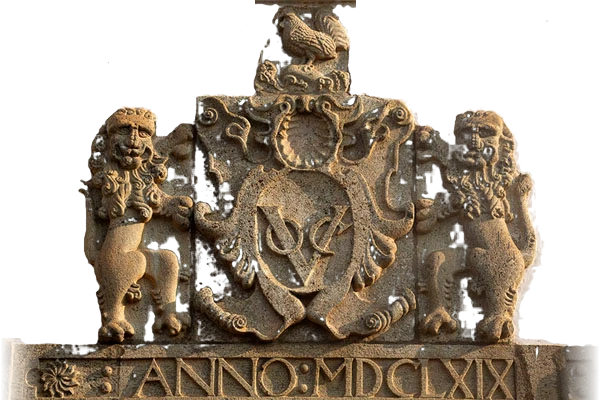
Heritage is a museum word — a thing admired behind glass, safely in the past. What we protect is alive: the peeler’s hand, the maker’s knowledge, a skill passed down by people you could still go and meet, and fewer of them every year.
So we don’t sell you nostalgia. We show you the hand doing the work, we name the person, and we tell you how few are left.
Skill carries a price. Nostalgia doesn’t.
If a thing doesn’t meet all five, it isn’t Sinnerman.
{{ v.body }}
{{ v.does }}
{{ v.proof }}
The code on the side of every canister leads to the exact plantation, and the family who grew and peeled the bark that’s inside it. Not a region. Not a vibe. A name, a place, a face.
Scan it, or enter it at sinnerman.co/trace.
Real cinnamon, honestly sourced, fairly paid.
That’s all Sinnerman is.
{{ para.t }}
A receipt is on its way to {{ form.email }}. Each canister carries its own trace code on the side panel.